Panchayats and Indigenous Governance: Advancing Economic Policies in Tribal Communities vis-à-vis Nyishis of Kamporijo Administrative Circle of Arunachal Pradesh
Bar Yakar
Assistant Professor, Department of Political Science, Dera Natung Govt. College, Itanagar, Arunachal
Pradesh, India.
10.46679/9789349926141ch15
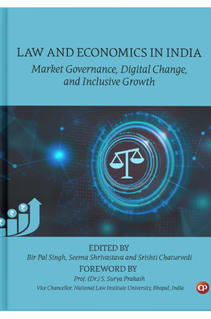
This chapter is a part of: Law and Economics in India: Market Governance, Digital Change, and Inclusive Growth from India
ISBN (Ebook): 978-93-49926-14-1
ISBN (Hardcover Print): 978-93-49926-73-8
ISBN (Softcover Print): 978-93-49926-54-7
© CSMFL Publications & its authors.
Published: April 15, 2026
Abstract
This research investigates the pivotal role of Corporate Social Responsibility (CSR) in advancing disability inclusion within the Indian context. Guided by Section 135 of the Companies Act 2013, the study examines how CSR initiatives can effectively fulfill social and economic obligations towards persons with disabilities. The research employs a doctrinal approach to achieve this objective, meticulously analyzing relevant legal provisions. These include Section 135 of the Companies Act, 2013, its accompanying Schedule VII, and the critical provisions outlined in the Rights of Persons with Disabilities Act, 2016. This research explores practical strategies for companies to integrate disability inclusion into their CSR frameworks. This exploration emphasizes the significance of implementing targeted initiatives such as skill development, specialized training programs, and creating inclusive employment opportunities specifically designed for individuals with disabilities. Furthermore, the research delves into the potential impact of inclusive CSR practices on the rights of persons with disabilities. This analysis specifically focuses on the critical areas of education and employment, examining how these practices can enhance access to opportunities and foster greater social participation. Finally, the research incorporates a case study of Tata Consultancy Services (TCS), providing a real-world example of a company successfully implementing disability-inclusive CSR initiatives. By meticulously examining the legal framework, analyzing best practices, and exploring real-world case studies, this research aims to provide valuable insights into the role of CSR in promoting disability inclusion in India. It seeks to identify best practices for companies and ultimately contribute to developing a more inclusive and equitable society for all.
Keywords: Company, CSR, Inclusivity, Persons with disabilities (PWD), Self-Employment.
This book is available worldwide via EBSCOhost Academic Collection, EBSCO E- books, Google Play Books, Amazon, World Cat Discovery Service/OCLC, CSMFL Bookstore, and 200+ book resellers and academic content vendors.
Statement on Publication Ethics
We, at CSMFL Publications, are committed to ensure the unbiased and transparent publishing, and upholding the high standards of editorial integrity in our publications. To know more, please read our Statement on Publication Ethics, Editorial Integrity & Misconduct