Designing Your Entrepreneurial Wellness Blueprint
Satish Sharma
Lead Management Consultant, SKS Consulting & Advisors, India.
10.46679/9789349926219ch05
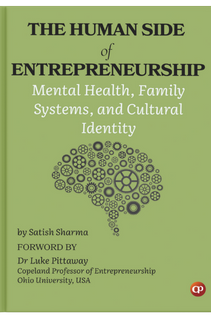
This chapter is a part of: The Human Side of Entrepreneurship: Mental Health, Family Systems, and Cultural Identity from India
ISBN (Ebook):978-93-49926-21-9
ISBN (Hardcover Print):978-93-49926-09-7
ISBN (Softcover Print):978-93-49926-53-0
© CSMFL Publications & its authors.
Published: March 5, 2026
Abstract
Entrepreneurial wellness approaches frequently prove inadequate for entrepreneurs who face unique stressors. These unique stressors include irregular schedules, financial volatility, and the psychological burden of constant decision-making under uncertainty. This chapter investigates how entrepreneurial pressures intersect with personal health and wellness. We present research-backed methods for building sustainable self-care approaches specifically designed for entrepreneurial contexts. Our work draws from positive psychology, organizational behavior, and entrepreneurship research to establish a systematic approach that helps business founders assess their needs, design effective practices, implement sustainable routines, and track their progress while managing the demands of business development.
The discussion details multiple aspects of entrepreneurial wellness while recognizing how cultural backgrounds and family dynamics shape health outcomes for business founders. Through reviewing existing research on stress management for entrepreneurs, mindfulness applications, and work-life balance strategies, this chapter explains practical methods for creating individualized wellness plans that support both personal sustainability and business achievement.
Keywords: Entrepreneurial Wellness, Work-life Balance, Performance Sustainability, Mindfulness Applications
References
- Allen, D. (2015). Getting Things Done: The Art of Stress-free Productivity. United Kingdom: Piatkus.
- Ashforth, B. E., Kreiner, G. E., & Fugate, M. (2000). All in a day’s work: Boundaries and micro role transitions. Academy of Management Review, 25(3), 472-491.
- Barber, L. K., & Santuzzi, A. M. (2015). Please respond ASAP: Workplace telepressure and employee recovery. Journal of Occupational Health Psychology, 20(2), 172-189.
- Barley, S. R., Meyerson, D. E., & Grodal, S. (2011). E-mail as a source and symbol of stress. Organization Science, 22(4), 887-906.
- Barnes, C. M., & Watson, N. F. (2019). Why healthy sleep is good for business. Sleep Medicine Reviews, 47, 112-118.
- Baron, R. A. (2008). The role of affect in the entrepreneurial process. Academy of Management Review, 33(2), 328-340.
- Baron, R. A., Franklin, R. J., & Hmieleski, K. M. (2016). Why entrepreneurs often experience low, not high, levels of stress: The joint effects of selection and psychological capital. Journal of Management, 42(3), 742-768.
- Baron, R. A., & Henry, R. A. (2011). Entrepreneurship: The genesis of organizations. In S. Zedeck (Ed.), APA handbook of industrial and organizational psychology (pp. 241-273). American Psychological Association.
- Battisti, M., & Deakins, D. (2017). The relationship between dynamic capabilities, the firm’s resource base and performance in a post-disaster environment. International Small Business Journal, 35(1), 78-98.
- Boguslawski, S., & Gordon, E. S. (2019). Integrating mindfulness practice into daily life: A large-scale qualitative study of individual experience. Journal of Alternative and Complementary Medicine, 25(5), 837-846.
- Bono, J. E., Glomb, T. M., Shen, W., Kim, E., & Koch, A. J. (2012). Building positive resources: Effects of positive events and positive reflection on work stress and health. Academy of Management Journal, 56(6), 1601-1627.
- Buttner, E. H. (1992). Entrepreneurial stress: Is it hazardous to your health? Journal of Managerial Issues, 4(2), 223-240.
- Byrne, O., Shepherd, D. A., & Toftnes, D. (2016). Finding meaning in the aftermath of failure: An identity process. Journal of Business Venturing Insights, 5, 6-13.
- Cardon, M. S., Gregoire, D. A., Stevens, C. E., & Patel, P. C. (2013). Measuring entrepreneurial passion: Conceptual foundations and scale validation. Journal of Business Venturing, 28(3), 373-396.
- Cardon, M. S., & Patel, P. C. (2015). Is stress worth it? Stress-related health and wealth trade-offs for entrepreneurs. Applied Psychology, 64(2), 379-420.
- Chang, Y. K., Labban, J. D., Gapin, J. I., & Etnier, J. L. (2012). The effects of acute exercise on cognitive performance: A meta-analysis. Brain Research, 1453, 87-101.
- Christopher, J. C. (1999). Situating psychological well-being: Exploring the cultural roots of its theory and research. Journal of Counseling & Development, 77(2), 141-152.
- Clayton, R. W., Thomas, C. H., Singh, B., & Winkel, D. E. (2015). Exercise as a means of reducing perceptions of work-family conflict: A test of the roles of self-efficacy and psychological strain. Human Resource Management, 59(6), 1013–1035.
- Clear, J. (2018). Atomic habits: An easy & proven way to build good habits & break bad ones. Avery.
- Cohen, S., Kamarck, T., & Mermelstein, R. (1983). A global measure of perceived stress. Journal of Health and Social Behavior, 24(4), 385-396.
- Cropley, M., Plans, D., Morelli, D., Sütterlin, S., Inceoglu, I., Thomas, G., & Chu, C. (2017). The association between work-related rumination and heart rate variability: A field study. Frontiers in Human Neuroscience, 11, 27.
- Delgado García, J. B., De Quevedo Puente, E., & Blanco Mazagatos, V. (2015). How affect relates to entrepreneurship: A systematic review of the literature and research agenda. International Journal of Management Reviews, 17(2), 191-211.
- Diener, E., Emmons, R. A., Larsen, R. J., & Griffin, S. (2010). The Satisfaction With Life Scale. Journal of Personality Assessment, 49(1), 71-75.
- Diener, E., Wirtz, D., Tov, W., Kim-Prieto, C., Choi, D., Oishi, S., & Biswas-Diener, R. (2010). New well-being measures: Short scales to assess flourishing and positive and negative feelings. Social Indicators Research, 97(2), 143-156.
- Diener, E., Heintzelman, S. J., Kushlev, K., Tay, L., Wirtz, D., Lutes, L. D., & Oishi, S. (2017). Findings all psychologists should know from the new science on subjective well-being. Canadian Psychology/Psychologie Canadienne, 58(2), 87-104.
- Diener, E., Wirtz, D., Biswas-Diener, R., Tov, W., Kim-Prieto, C., Choi, D. W., & Oishi, S. (2009). New measures of well-being. Social Indicators Research Series, 39, 247-266.
- Drnovsek, M., Örtqvist, D., & Wincent, J. (2010). The effectiveness of coping strategies used by entrepreneurs and their impact on personal well-being and venture performance. Journal of Economics and Business, 28(2), 193-220.
- Duckworth, A. L., Milkman, K. L., & Laibson, D. (2018). Beyond willpower: Strategies for reducing failures of self-control. Psychological Science in the Public Interest, 19(3), 102-129.
- Emmons, R. A., & McCullough, M. E. (2003). Counting blessings versus burdens: An experimental investigation of gratitude and subjective well-being in daily life. Journal of Personality and Social Psychology, 84(2), 377-389.
- Fogg, B. J. (2019). Tiny habits: The small changes that change everything. Houghton Mifflin Harcourt.
- Gardner, B., Lally, P., & Wardle, J. (2012). Making health habitual: The psychology of ‘habit-formation’ and general practice. British Journal of General Practice, 62(605), 664-666.
- Gollwitzer, P. M., & Sheeran, P. (2006). Implementation intentions and goal achievement: A meta-analysis of effects and processes. Advances in Experimental Social Psychology, 38, 69-119.
- Good, D. J., Lyddy, C. J., Glomb, T. M., Bono, J. E., Brown, K. W., Duffy, M. K., Baer, R. A., Brewer, J. A., & Lazar, S. W. (2016). Contemplating mindfulness at work: An integrative review. Journal of Management, 42(1), 114-142.
- Gunia, B. C., Gish, J. J., & Mensmann, M. (2020). The weary founder: Sleep problems, ADHD-like tendencies, and entrepreneurial intentions. Entrepreneurship Theory and Practice, 45(1), 175-210.
- Hahn, T., Pinkse, J., Preuss, L., & Figge, F. (2014). Cognitive frames in corporate sustainability: Managerial sensemaking with paradoxical and business case frames. Academy of Management Review, 39(4), 463-487.
- Halbesleben, J. R. (2006). Sources of social support and burnout: A meta-analytic test of the conservation of resources model. Journal of Applied Psychology, 91(5), 1134-1145.
- Hmieleski, K. M., & Carr, J. C. (2007). The relationship between entrepreneur psychological capital and well-being. Frontiers of Entrepreneurship Research, 28(4), Article 3.
- Hofstede, G. (2011). Dimensionalizing cultures: The Hofstede model in context. Online Readings in Psychology and Culture, 2(1), 8.
- House, R. J., Hanges, P. J., Javidan, M., Dorfman, P. W., & Gupta, V. (Eds.). (2004). Culture, leadership, and organizations: The GLOBE study of 62 societies. Sage Publications.
- Hsu, D. K., Wiklund, J., & Cotton, R. D. (2017). Success, Failure, and Entrepreneurial Reentry: An Experimental Assessment of the Veracity of Self–Efficacy and Prospect Theory. Entrepreneurship Theory and Practice, 41(1), 19-47.
- Hülsheger, U. R., Alberts, H. J., Feinholdt, A., & Lang, J. W. (2013). Benefits of mindfulness at work: The role of mindfulness in emotion regulation, emotional exhaustion, and job satisfaction. Journal of Applied Psychology, 98(2), 310-325.
- Irish, L. A., Kline, C. E., Gunn, H. E., Buysse, D. J., & Hall, M. H. (2015). The role of sleep hygiene in promoting public health: A review of empirical evidence. Sleep Medicine Reviews, 22, 23-36.
- Jansen, K. J., Shipp, A. J., & Michael, J. H. (2016). Champions, converts, doubters, and defectors: The impact of shifting perceptions on momentum for change. Personnel Psychology, 69(3), 673-707.
- Karelaia, N., & Reb, J. (2015). Improving decision making through mindfulness. In J. Reb & P. W. B. Atkins (Eds.), Mindfulness in organizations: Foundations, research, and applications (pp. 163-189). Cambridge University Press.
- Kredlow, M. A., Capozzoli, M. C., Hearon, B. A., Calkins, A. W., & Otto, M. W. (2015). The effects of physical activity on sleep: A meta-analytic review. Journal of Behavioral Medicine, 38(3), 427-449.
- Luthans, F., Avolio, B. J., Avey, J. B., & Norman, S. M. (2007). Positive psychological capital: Measurement and relationship with performance and satisfaction. Personnel Psychology, 60(3), 541-572.
- Luthans, F., Avey, J. B., Avolio, B. J., & Peterson, S. J. (2010). The development and resulting performance impact of positive psychological capital. Human Resource Development Quarterly, 21(1), 41-67.
- Macan, T. H. (1994). Time management: Test of a process model. Journal of Applied Psychology, 79(3), 381-391.
- Mahmood, L., Hopthrow, T., & Randsley de Moura, G. (2016). A moment of mindfulness: Computer-mediated mindfulness practice increases state mindfulness. PLOS ONE, 11(4), e0153923.
- Mansi, G., & Levy, Y. (2013). Do instant messaging interruptions help or hinder knowledge workers’ task performance? International Journal of Information Management, 33(3), 591-596.
- Mark, G., Iqbal, S., & Czerwinski, M. (2017). How blocking distractions affects workplace focus and productivity. Proceedings of the 2017 ACM International Joint Conference on Pervasive and Ubiquitous Computing and Proceedings of the 2017 ACM International Symposium on Wearable Computers Pages 928 – 934.
- Markus, H. R., & Kitayama, S. (1991). Culture and the self: Implications for cognition, emotion, and motivation. Psychological Review, 98(2), 224-253.
- Maslach, C., Jackson, S. E., & Leiter, M. P. (1996). Maslach Burnout Inventory manual (3rd ed.). Consulting Psychologists Press.
- Meredith, G. R., Rakow, D. A., Eldermire, E. R. B., Madsen, C. G., Shelley, S. P., & Sachs, N. A. (2020). Minimum time dose in nature to positively impact the mental health of college-aged students, and how to measure it: A scoping review. Frontiers in Psychology, 10, 2942.
- Munson, S. A., & Consolvo, S. (2012). Exploring goal-setting, rewards, self-monitoring, and sharing to motivate physical activity. Proceedings of the 6th International Conference on Pervasive Computing Technologies for Healthcare, 25-32.
- Neck, C. P., & Houghton, J. D. (2006). Two decades of self-leadership theory and research: Past developments, present trends, and future possibilities. Journal of Managerial Psychology, 21(4), 270-295.
- Neck, C. P., Houghton, J. D., Sardeshmukhk, S., Goldsby, M., & Godwin, J. L. (2013). Self-leadership: A cognitive resource for entrepreneurs. Journal of Small Business & Entrepreneurship, 26(5), 463-480.
- Newport, C. (2016). Deep work: Rules for focused success in a distracted world. Grand Central Publishing.
- Newman, A., Ucbasaran, D., Zhu, F., & Hirst, G. (2014). Psychological capital: A review and synthesis. Journal of Organizational Behavior, 35(S1), S120-S138.
- Nikolova, M. (2019). Switching to self-employment can be good for your health. Journal of Business Venturing, 34(4), 664-691.
- Oswald, A. J., Proto, E., & Sgroi, D. (2015). Happiness and productivity. Journal of Labor Economics, 33(4), 789-822.
- Parasuraman, S., & Simmers, C. A. (2001). Type of employment, work-family conflict and well-being: A comparative study. Journal of Organizational Behavior, 22(5), 551-568.
- Perlow, L. A., & Porter, J. L. (2009). Making time off predictable—and required. Harvard Business Review, 87(10), 102-109.
- Prestwich, A., Conner, M. T., Lawton, R. J., Ward, J. K., Ayres, K., & McEachan, R. R. (2012). Randomized controlled trial of collaborative implementation intentions targeting working adults’ physical activity. Health Psychology, 31(4), 486-495.
- Rauch, A., Fink, M., & Hatak, I. (2018). Stress processes: An essential ingredient in the entrepreneurial process. Academy of Management Perspectives, 32(3), 340-357.
- Ryff, C. D. (1989). Happiness is everything, or is it? Explorations on the meaning of psychological well-being. Journal of Personality and Social Psychology, 57(6), 1069-1081.
- Ryff, C. D., & Singer, B. H. (2008). Know thyself and become what you are: A eudaimonic approach to psychological well-being. Journal of Happiness Studies, 9(1), 13-39.
- Schonfeld, I. S., & Mazzola, J. J. (2015). A qualitative study of stress in individuals self-employed in solo businesses. Journal of Occupational Health Psychology, 20(4), 501-513.
- Schwartz, T., & McCarthy, C. (2007). Manage your energy, not your time. Harvard Business Review, 85(10), 63-73.
- Shepherd, D. A. (2015). Party On! A call for entrepreneurship research that is more interactive, activity based, cognitively hot, compassionate, and prosocial. Journal of Business Venturing, 30(4), 489-507.
- Shepherd, D. A., & Patzelt, H. (2015). The “heart” of entrepreneurship: The impact of entrepreneurial action on health and health on entrepreneurial action. Journal of Business Venturing Insights, 4, 22-29.
- Shepherd, D. A., Wiklund, J., & Haynie, J. M. (2009). Moving forward: Balancing the financial and emotional costs of business failure. Journal of Business Venturing, 24(2), 134-148.
- Sonnentag, S. (2012). Psychological detachment from work during leisure time: The benefits of mentally disengaging from work. Current Directions in Psychological Science, 21(2), 114-118.
- Sonnentag, S., & Fritz, C. (2007). The Recovery Experience Questionnaire: Development and validation of a measure for assessing recuperation and unwinding from work. Journal of Occupational Health Psychology, 12(3), 204-221.
- Sonnentag, S., & Fritz, C. (2015). Recovery from job stress: The stressor-detachment model as an integrative framework. Journal of Organizational Behavior, 36(S1), S72-S103.
- Stephan, U. (2018). Entrepreneurs’ mental health and well-being: A review and research agenda. Academy of Management Perspectives, 32(3), 290-322.
- Stephan, U., & Roesler, U. (2010). Health of entrepreneurs versus employees in a national representative sample. Journal of Occupational and Organizational Psychology, 83(3), 717-738.
- Thaler, R. H., & Sunstein, C. R. (2008). Nudge: Improving decisions about health, wealth, and happiness. Yale University Press.
- Tohidi, H. (2011). Time management in projects by applying MBO and TOC concepts. Procedia – Social and Behavioral Sciences, 25, 158-163.
- Torrès, O., & Thurik, R. (2019). Small business owners and health. Small Business Economics, 53(2), 311-321.
- Torrès, O., Benzari, A., Fisch, C., Mukerjee, J., Swalhi, A., & Thurik, R. (2021). Risk of burnout in French entrepreneurs during the COVID-19 crisis. Small Business Economics, 1-23.
- Travers, C. J., Morisano, D., & Locke, E. A. (2015). Self-reflection, growth goals, and academic outcomes: A qualitative study. British Journal of Educational Psychology, 85(2), 224-241.
- Uy, M. A., Foo, M. D., & Song, Z. (2013). Joint effects of prior start-up experience and coping strategies on entrepreneurs’ psychological well-being. Journal of Business Venturing, 28(5), 583-597.
- Uy, M. A., Jacob, G. H., & Gielnik, M. M. (2017). Cultural influences on entrepreneurial stress: Evidence from Filipino entrepreneurs in northern California and Manila. Journal of Small Business Management, 55(S1), 192-214.
- Watson, D., Clark, L. A., & Tellegen, A. (1988). Development and validation of brief measures of positive and negative affect: The PANAS scales. Journal of Personality and Social Psychology, 54(6), 1063-1070.
- Wheeler, M. J., Green, D. J., Ellis, K. A., Cerin, E., Heinonen, I., Naylor, L. H., Larsen, R., Wennberg, P., Boraxbekk, C., Lewis, J., Eikelis, N., Lautenschlager, N. T., Kingwell, B. A., Lambert, G., Owen, N., & Dunstan, D. W. (2020). Distinct effects of acute exercise and breaks in sitting on working memory and executive function in older adults: A three-arm, randomised cross-over trial to evaluate the effects of exercise with and without breaks in sitting on cognition. British Journal of Sports Medicine, 54(13), 776-781.
- Wiklund, J., Nikolaev, B., Shir, N., Foo, M. D., & Bradley, S. (2019). Entrepreneurship and well-being: Past, present, and future. Journal of Business Venturing, 34(4), 579-588.
- Williamson, A. J., Battisti, M., Leatherbee, M., & Gish, J. J. (2019). Rest, zest, and my innovative best: Sleep and mood as drivers of entrepreneurs’ innovative behavior. Entrepreneurship Theory and Practice, 43(3), 582-610.
This book is available worldwide via EBSCOhost Academic Collection, EBSCO E- books, Google Play Books, Amazon, World Cat Discovery Service/OCLC, CSMFL Bookstore, and 200+ book resellers and academic content vendors.
Statement on Publication Ethics
We, at CSMFL Publications, are committed to ensure the unbiased and transparent publishing, and upholding the high standards of editorial integrity in our publications. To know more, please read our Statement on Publication Ethics, Editorial Integrity & Misconduct