Narrating Stories of Culture: An Autoethnographic Reading of Haris Qadeer’s The Silence That Speaks-Short Stories by Indian Muslim Women and Attia Hosain’s Distant Traveller
Ajas N.1 , T. Abdul Rahman2 ,
1PhD Research Scholar, Department of English, The New College, Chennai, India; 2Associate Professor, Department of English, The New College, Chennai, India.
10.46679/9789349926509ch01
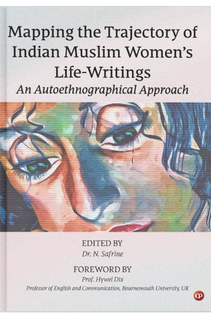
This chapter is a part of: Mapping the Trajectory of Indian Muslim Women’s Life-Writings: An Autoethnographical Approach from India
ISBN (Ebook): 978-93-49926-50-9
ISBN (Hardcover Print): 978-93-49926-84-4
ISBN (Softcover Print): 978-93-49926-34-9
© CSMFL Publications & its authors.
Published: April 15, 2026
Abstract
This chapter seeks to explore the stories of culture and religion portrayed through the diverse voices of female writers in Haris Qadeer’s edited anthology of Indian Muslim women’s short story collection titled The Silence that Speaks and Attia Hosain’s Distant Traveller. Both these collections consist of a wide range of stories that deftly represent the socio-cultural and political epoch of the writers that seamlessly blend with the fiction. Also, the chapter intends to study the texts through the lens of feminist autoethnography in order to understand the role of the authors as autoethnographers. A close reading of both the collection delineates the lives of Muslim women who silently fought against the patriarchal and traditional norms that relegated them to the margins. The essay has made an attempt to analyse those voices against the backdrop of their socio-political epoch and the role it has to play in situating the select texts within the ambit of Indian Muslim women’s literature.
Keywords: Anthology, Socio-Cultural, Socio-Political, Autoethnographers, Patriarchal
References
- Bose, M. (n.d.). Attia Hosain: Reclaimed, remembered, and recognized: Book review. Earthern Lamp Journal.
- Hobsbawm, E. J. (1991). The Age of Empire: 1875-1914.
- Hosain, A. (2015). Distant Traveller: New and Selected Fiction. Women Unlimited.
- Marin-Velasquez, M., & Closson-Pitts, B. (2019). Forging the ideal educated girl: the production of desirable subjects in Muslim South Asia. Gender and Education, 31(4), 560–561. https://doi.org/10.1080/09540253.2019.1583322
- Qadeer, H. (2020). The silence that speaks: Short Stories by Indian Muslim Women. Oxford University Press.
- Safrine. (2022). Tracing the interspersing trajectories of “Self” and “Culture”: An autoethnographical study of select Indian Muslim Women’s Life-Writings. Indian Literature, 66(4), 124–128. https://www.jstor.org/stable/27277329
This book is available worldwide via EBSCOhost Academic Collection, EBSCO E- books, Google Play Books, Amazon, World Cat Discovery Service/OCLC, CSMFL Bookstore, and 200+ book resellers and academic content vendors.
Statement on Publication Ethics
We, at CSMFL Publications, are committed to ensure the unbiased and transparent publishing, and upholding the high standards of editorial integrity in our publications. To know more, please read our Statement on Publication Ethics, Editorial Integrity & Misconduct