Can Silence Be a Source in History? A Mizāj Pursi of The Forgotten Lives of Six Indian Muslim Historical Female Figurines
Kaushiki Ishwar
Scholar, Interdisciplinary Fields of History, Philosophy, and Sociology, University of Delhi, India.
10.46679/9789349926509ch03
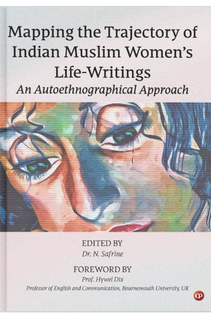
This chapter is a part of: Mapping the Trajectory of Indian Muslim Women’s Life-Writings: An Autoethnographical Approach from India
ISBN (Ebook): 978-93-49926-50-9
ISBN (Hardcover Print): 978-93-49926-84-4
ISBN (Softcover Print): 978-93-49926-34-9
© CSMFL Publications & its authors.
Published: April 15, 2026
Abstract
This chapter aims to document and critically engage with the political contributions of Indian Muslim women, who have frequently been overlooked in conventional historiography. There is extremely little evidence-based research on the lives of women and absolutely no autoethnographic evidence. The chapter chronicles the lives and legacies of figures such as Anees Fatima, Nishatunnisa Mohani, Abadi Bano Begum (Bi Amma), Begum Hazrat Mahal, Anis Kidwai, and Zubaida Daoodi from the 1857 First War of Independence to the aftermath of Partition. The chapter examines the absence of structured archives and provides an interpretive historiographical intervention utilizing oral histories, legislative records, and feminist reinterpretations of nationalist myths.
Keywords: Feminist Historiography, Muslim Women, Archival Research, Feminist Research, Indian National Movement
References
- Anjum, D. (2016, November 13). Role of Muslim women in freedom movement. Mpositive.in.
- Ganie, M. H. (2022, September 29). Remembering Lady Anees Imam, one of the founders of modern Bihar. TwoCircles.net.
- Sharif, M. (2022, August 17). 75 years of Independence: Muslim women in India’s freedom struggle. The Siasat Daily.
- Kidwai, A. (1950). In Freedom’s Shade (Z. Kidwai, Trans.). Penguin Books.
- Forbes, G. H. (1996). Women in modern India. Cambridge University Press.
- Roy, A. (2005). Gender and colonialism: Women’s writing and historiography in India. Routledge.
- Chatterjee, P. (1989). Colonialism, nationalism, and colonialized women. American Ethnologist, 16(4), 622–633.
- Sarkar, T., & Butalia, U. (Eds.). (1995). Women and the Hindu Right: A Collection of Essays. Kali for Women.
- Hasan, M. (2000). Islam, Women and Violence in Kashmir: Between India and Pakistan. Oxford University Press.
- Bannerjee, S. (2005). Make Me a Man! Masculinity, Hinduism, and Nationalism in India. SUNY Press.
- Panikkar, K. N. (1986). Culture, ideology, and hegemony: Intellectuals and social consciousness in colonial India. Tulika Books.
- Ramaswamy, V. (2007). Historical perspectives on gendered violence and peacemaking. Zubaan.
- Ray, B., & Basu, A. (Eds.). (1999). From Independence Towards Freedom: Indian Women Since 1947. Oxford University Press.
- Menon, N., & Bhasin, K. (1993). Recovery, rupture, resistance: Indian state and abduction of women during Partition. Economic and Political Weekly, 28(17), WS2–WS11.
- Jalal, A. (1995). Democracy and authoritarianism in South Asia: A comparative and historical perspective. Cambridge University Press.
- Guha, R. (2007). India after Gandhi: The History of the World’s Largest Democracy. Picador.
- Zia, A. S. (2019). Faith and Feminism in Pakistan: Religious Agency or Secular Autonomy? Sussex Academic Press.
- Datta, A. (2012). On Uncertain Ground: Displaced Women in Post-Partition India. Oxford University Press.
- Bhatia, N. (2008). Acts of Authority, Acts of Resistance: Theater and Politics in Colonial and Postcolonial India. University of Michigan Press.
- Tyagi, R. (2014). Indian Muslim women: Contemporary challenges and future directions. Journal of Muslim Minority Affairs, 34(4), 384–399.
This book is available worldwide via EBSCOhost Academic Collection, EBSCO E- books, Google Play Books, Amazon, World Cat Discovery Service/OCLC, CSMFL Bookstore, and 200+ book resellers and academic content vendors.
Statement on Publication Ethics
We, at CSMFL Publications, are committed to ensure the unbiased and transparent publishing, and upholding the high standards of editorial integrity in our publications. To know more, please read our Statement on Publication Ethics, Editorial Integrity & Misconduct