Influences of the Neoliberal Turn on Curriculum and Instruction in Higher Education: Reflections from The Field
Kevin J. MacLeod
School of Education and Technology, Royal Roads University, Canada.
10.46679/9789349926912ch11
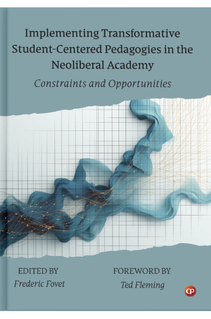
This chapter is a part of: Implementing Transformative Student-Centered Pedagogies in the Neoliberal Academy: Constraints and Opportunities
ISBN (Ebook): 978-93-49926-91-2
ISBN (Hardcover Print): 978-93-49926-11-0
ISBN (Softcover Print): 978-93-49926-31-8
© CSMFL Publications & its authors.
Published: May 05, 2026
Abstract
The neoliberal transformation of higher education has significantly increased universities’ reliance on contract instructors. As institutions have shifted toward market-driven priorities such as efficiency, cost reduction, and student satisfaction, they have sought more flexible and less expensive forms of academic labor. Tenure-track faculty, who traditionally provided stability, academic leadership, and long-term pedagogical investment, are increasingly being replaced by contract instructors who can be hired and released on short-term bases. This has created a two-tier faculty system in which contract instructors now carry a disproportionate share of the teaching load while lacking the job security, benefits, and institutional protection afforded to their tenure-track colleagues. Within this context, student evaluations of teaching have become a primary mechanism for assessing and renewing contract instructors, making them particularly vulnerable to the well-documented biases embedded in these evaluations. As a result, the same neoliberal forces that expanded the use of contract faculty have also intensified the inequities and precarity associated with their employment.
Further, the influence of neoliberalism on higher education has affected the way instructors are perceived and rated by students. Further, by way of these evaluations, post-secondary students as consumers of educational products offered by higher education, have impacted the way instructors design and deliver instruction and assessment. One potentially positive effect of the neoliberal influence on higher education relates to the benefits students may receive from course instructors endeavoring to acquire favorable ratings by implementing student-centered pedagogies, as constructivist inspired approaches to active learning have the potential to enhance students’ learning experiences. Separate sections of this chapter address components of the broad areas of curriculum and instruction in higher education including, curriculum content, planning, delivery, and assessment, drawing from research in higher education and from my lived experiences as a post-secondary instructor. Each section includes a phenomenological description of I haves experienced the individual components of curriculum and instruction in higher education, along with addressing how the elements of instruction have been implemented over time in relation to typical rating criteria designed for students’ use. The chapter concludes with prospects for future research.
Keywords: Contract Instructors, Student Evaluations of Teaching, Neoliberal Higher Education, Academic Precarity, Student-Centered Pedagogy
References
- Adler, E. (2018). The neoliberal university and the neoliberal curriculum. Humanitas, 31(1/2), 113-125. https://doi.org/10.5840/humanitas2018311/25
- Allan, C. (2018, April 20). What is the purpose of a university? https://www.pearson.com/uk/educators/higher-education-educators/course-development-blog/2018/04/what-is-the-purpose-of-a-university-.html
- Alt, D. (2016). Contemporary constructivist practices in higher education settings and academic motivational factors. Australian Journal of Adult Learning, 56(3), 374-399.
- Barre, E. (2018, February 22). Research on student ratings continues to evolve. We should, too. https://www.elizabethbarre.com/blog/2018/3/research-on-student-ratings-continues-to-evolve-we-should-too
- Benton, S. L., & Ryalls, K. R. (2016). Challenging misconceptions about student ratings of instruction. IDEA Paper #58. https://ideacontent.blob.core.windows.net/content/sites/2/2020/01/PaperIDEA_58.pdf
- Berk, R.A. (2018). Start spreading the news: Use multiple sources of evidence to evaluate teaching. Journal of Faculty Development, 32(1), 73-81.
- Boland, J. E., & Queen, R. (2016). If you’re (sic) house is still available, send me an email: Personality influences reactions to written errors in email messages. PLoS ONE 11(3): e0149885. https://doi.org/10.1371/journal.pone.0149885
- Boysen, G. A. (2016). Using student evaluations to improve teaching: Evidence-based recommendations. Scholarship of Teaching and Learning in Psychology, 2(4), 273–284. https://doi.org/10.1037/stl0000069
- Bunce, L., Baird, A., & Jones, S. E. (2017). The student-as-consumer approach in higher education and its effects on academic performance. Studies in Higher Education, 42(11), 1,958–1,978. https://doi.org/10.1080/03075079.2015.1127908
- Chyung, S.Y., Kennedy, M., & Campbell, I. (2018). Evidence‐based survey design: The use of ascending or descending order of Likert‐type response options. Performance Improvement, 57(9), 9-16. https://doi.org/10.1002/pfi.21800
- Craddock, E. (2019). The uncomfortable transformation of discomfort in the neoliberal higher education context. Social Epistemology Review and Reply Collective, 8(10), 107-110. https://wp.me/p1Bfg0-4ze
- Cruickshank, J. (2019). The feudal university in the age of gaming the system. Social Epistemology Review and Reply Collective, 8(8), 12-14. https://wp.me/p1Bfg0-4ix
- Daskalopoulou, A. (2024). Understanding the impact of biased student evaluations: An intersectional analysis of academics’ experiences in the UK higher education context. Studies in Higher Education, 49(12), 2411–2422. https://doi.org/10.1080/03075079.2024.2306364
- del Cerro Santamaría, G. (2021). Neoliberal higher education and its discontents. In J. D. Branch & B. Christiansen (Eds.), The Marketisation of Higher Education. Marketing and Communication in Higher Education (pp. 423-453). Palgrave Macmillan. https://doi.org/10.1007/978-3-030-67441-0_18
- deNoyelles, A., Zydney, J., & Chen, B. (2014). Strategies for creating a community of inquiry through online asynchronous discussions. MERLOT Journal of Online Learning and Teaching, 10(1), 153-165. http://jolt.merlot.org/vol10no1/denoyelles_0314.pdf
- Evans, M. (2020). Navigating the neoliberal university: Reflecting on teaching practice as a teacher-researcher-trade unionist. British Journal of Sociology of Education, 41(4), 574-590. https://doi.org/10.1080/01425692.2020.1748572
- Fiock, H. (2020). Designing a community of inquiry in online courses. The International Review of Research in Open and Distributed Learning, 21(1), 135-153. https://doi.org/10.19173/irrodl.v20i5.3985
- Hasani, L. M., Santoso, H. B., & Junus, K. (2022). Designing asynchronous online discussion forum interface and interaction based on the community of inquiry framework. The International Review of Research in Open and Distributed Learning, 23(2), 191-213. https://doi.org/10.19173/irrodl.v23i2.6016
- Heller, H. (2016, November 21). Protesting the capitalist university. Canadian Dimension. https://canadiandimension.com/articles/view/protesting-the-capitalist-university
- Hicks, O. (2018). Curriculum in higher education: Confusion, complexity and currency. Higher Education Research and Development Society of Australasia (HERDSA). HERDSA Review of Higher Education, 5, 5-30.
- Johnston, B., MacNeill, S., & Smyth, K. (2018). Neoliberalism and the digital university: The political economy of learning in the Twenty-First Century. In Conceptualising the Digital University. Digital Education and Learning (pp. 3-17). Palgrave Macmillan. https://doi.org/10.1007/978-3-319-99160-3_1
- Kenny, J. & Fluck, A. E. (2017). Towards a methodology to determine standard time allocations for academic work. Journal of Higher Education Policy and Management, 39(5), 503-523. https://doi.org/10.1080/1360080X.2017.1354773
- Krause-Jensen, J., & Garsten, C. (2014). Neoliberal turns in higher education. Learning and Teaching, 7(3), 1-13.
- Linse, A. R. (2017). Interpreting and using student ratings data: Guidance for faculty serving as administrators and on evaluation committees. Studies in Educational Evaluation, 54, 94-106. https://doi.org/10.1016/j.stueduc.2016.12.004
- Lomellini, A., Lowenthal, P.R., Snelson, C., & Trespalacios, J. H. (2025). Accessible and inclusive online learning in higher education: A review of the literature. Journal of Computing in Higher Education, 37, 1306–1329. https://doi.org/10.1007/s12528-024-09424-2
- Manfra, M.M. (2019). Action research and systematic change in teaching practice. Review of Research in Education, 43(1), 163-196. https://doi.org/10.3102/0091732X18821132
- Mawaddah, S., Upsher, R.J., Cotier, F.A., Findon, J. L., & Dommett, E. J. (2025). The Relationship Between Digital Competencies and Mental Health in Online Learning: A Systematic Review of Neurotypical and Neurodivergent Higher Education Students. Technology, Knowledge and Learning, 1-32. https://doi.org/10.1007/s10758-025-09927-6
- McAlvage, K., & Jaramillo Cherrez, N. (2025). Inclusive teaching online. https://open.oregonstate.education/teachingonline/front-matter/introduction/
- McCann, M. (2017). Constructive alignment in economics teaching: A reflection on effective implementation. Teaching in Higher Education, 22(3), 336–348. https://doi.org/10.1080/13562517.2016.1248387
- Mintz, B. (2021). Neoliberalism and the crisis in higher education: The cost of ideology. American Journal of Economics and Sociology, 80(1), 79-112.
- Nasser-Abu Alhija, F. M. (2017). Teaching in higher education: Good teaching through students’ lens. Studies in Educational Evaluation, 54, 4-12. https://doi.org/10.1016/j.stueduc.2016.10.006
- Nerstrom, N. (2014). An emerging model for transformative learning [Conference proceedings]. Adult Education Research Conference. https://newprairiepress.org/aerc/2014/papers/55
- Nerstrom, N. (2017). Transformative learning: Moving beyond theory and practice. International Journal of Adult Vocational Education and Technology, 8(1), 36-46.
- O’Connor, K. (2018). The curriculum question in higher education. Curriculum Perspectives, 38, 73–76. https://doi.org/10.1007/s41297-017-0036-4
- Paolini, A. (2015). Enhancing teaching effectiveness and student learning outcomes. The Journal of Effective Teaching, 15(1), 20-33. https://files.eric.ed.gov/fulltext/EJ1060429.pdf
- Poproski, R. & Greene, R. (2018). Metrics and measures of teaching effectiveness. Unpublished white paper, Georgia Institute of Technology.
- Radhakrishnan, P., Frederickson, M., & Toh, S. M. (2025). How student perceptions of teaching are biased against women and ethnic minority professors in O. Holmes IV (Ed.), Championing Diversity, Equity, and Inclusion (Volume 2): Effective Strategies for Management Education (pp. 99-120). Palgrave MacMillan. https://doi.org/10.1007/978-3-031-89384-1_5
- Riggs, S. A., & Linder, K. E. (2016, December). Actively engaging students in asynchronous online classes. IDEA Paper #64. https://www.ideaedu.org/idea_papers/actively-engaging-students-in-asynchronous-online-classes/
- Robertson, L. (2018). Toward an epistemology of active learning in higher education and its promise. In A. Misseyanni, M. D. Lytras, P. Papadopoulou, & C. Marouli (Eds.), Active learning strategies in higher education: Teaching for leadership, innovation, and creativity (pp. 17-44). Emerald Publishing.
- Sogunro, O. A. (2017). Quality instruction as a motivating factor in higher education. International Journal of Higher Education, 6(4), 173-184.
- Stark, P. B., & Freishtat, R. (2014). An evaluation of course evaluations. ScienceOpen Research, 0(0), 1-7. https://www.scienceopen.com/hosted-document?doi=10.14293/S2199-1006.1.SOR-EDU.AOFRQA.v1
- Stojić, S. M., Dobrijević, G., Stanišić, N., & Stanić, N. (2014). Characteristics and activities of teachers on distance learning programs that affect their ratings. International Review of Research in Open and Distance Learning, 15(4), 248–262.
- Stroebe, W. (2020). Student evaluations of teaching encourages poor teaching and contributes to grade inflation: A theoretical and empirical analysis. Basic and Applied Social Psychology, 42(4), 276–294. https://doi.org/10.1080/01973533.2020.1756817
- Taylor, A. (2017). Perspectives on the university as a business: The corporate management structure, neoliberalism, and higher education. Journal for Critical Education Policy Studies, 15(1), 108-135.
- Thomas, J. E., & Graham, C. R. (2017). Common practices for evaluating post-secondary online instructors. Online Journal of Distance Learning Administration, 20(4), 1-17. https://www.westga.edu/~distance/ojdla/winter204/thomas_graham204.html
- Tiainen, K., Leiviskä, A., & Brunila, K. (2018). Democratic education for hope: Contesting the neoliberal common sense. Studies in Philosophy and Education, 38, 641–655.
- Tight, M. (2019). The neoliberal turn in Higher Education. Higher Education Quarterly, 73(3), 273-284.
- Uttl, B., White, C. A., & Wong Gonzalez, D. (2017). Meta-analysis of faculty’s teaching effectiveness: Student evaluation of teaching ratings and student learning are not related. Studies in Educational Evaluation, 54, 22-42. https://doi.org/10.1016/j.stueduc.2016.12.004
- van Manen, M. (2016). Phenomenology of practice: Meaning-giving methods in phenomenological research and writing. Routledge.
This book is available worldwide via EBSCOhost Academic Collection, EBSCO E- books, Google Play Books, Amazon, World Cat Discovery Service/OCLC, CSMFL Bookstore, and 200+ book resellers and academic content vendors.
Statement on Publication Ethics
We, at CSMFL Publications, are committed to ensure the unbiased and transparent publishing, and upholding the high standards of editorial integrity in our publications. To know more, please read our Statement on Publication Ethics, Editorial Integrity & Misconduct