Innovating Within the System: Transforming Grading Processes in Online Learning Environments
Jennifer Schneider
Community College of Philadelphia (Philadelphia, PA), USA.
10.46679/9789349926912ch12
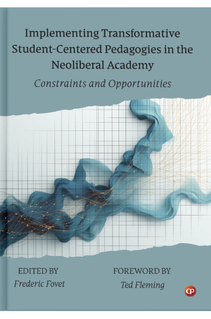
This chapter is a part of: Implementing Transformative Student-Centered Pedagogies in the Neoliberal Academy: Constraints and Opportunities
ISBN (Ebook): 978-93-49926-91-2
ISBN (Hardcover Print): 978-93-49926-11-0
ISBN (Softcover Print): 978-93-49926-31-8
© CSMFL Publications & its authors.
Published: May 05, 2026
Abstract
As online learning continues to expand, both the online grading and feedback processes and instructor beliefs and perceptions associated with such processes take on increasingly important significance. By exploring the impact of grading feedback interventions, this chapter contributes to a more nuanced understanding of how the grading and feedback processes might be improved for the benefit of students in the neoliberal academy. The chapter explores pedagogical strategies, tools, and approaches, including a customizable feedback generator and an open access feedback bank, that have emerged out of a need and desire to push back against neoliberal imperatives and simultaneously provide additional supports in connection with the grading and feedback processes. These tools are shared as examples of the types of faculty-driven innovations that help both students and instructors thrive within, and simultaneously shift from the inside out, rapidly shifting university models and systems.
Keywords: Online Learning, Grading Feedback, Pedagogical Innovation, Neoliberal Academy, Faculty-Driven Tools, Feedback Interventions
References
- Allen, I. E., & Seaman, J. (2017). Digital learning compass: Distance education report enrollment report 2017. Online Learning Survey.
- Bandura, A. (1993). Perceived self-efficacy in cognitive development and functioning. Educational Psychologist, 28(2), 117–148.
- Bandura, A. (1994). Self-efficacy. In V. S. Ramachaudran (Ed.), Encyclopedia of human behavior (Vol. 4, pp. 71-81). New York, NY: Academic Press.
- Bandura, A. (1997). Self-efficacy: The exercise of control. New York, NY: W.H. Freeman & Co.
- Betts, K. (2017). The growth of online learning: How universities must adjust to the new norm. Education Dive.
- Black, P. & William, D. (1998). Assessment and classroom learning. Assessment in Education Principles, Policy and Practice, 5(1), 7–74. doi:10.1080/0969595980050102
- Bloomberg, P., & Pitchford, B. (2017). Leading impact teams: Building a culture of efficacy. Thousand Oaks, CA: Corwin.
- Boud, D. & Molloy, E. (2013). Rethinking models of feedback for learning: The challenge of design. Assessment & Evaluation in Higher Education, 38(6), 698–712. doi:10.1080/02602938.2012.691462
- Bray, J. (n.d.). Assessment feedback using comment banks: A useful approach?
- Brinks, V. (2020). Fun or frustration? How emotions shape user innovation processes. Emotion, Space and Society, 34.
- Buckley, E., & Cowap, L. (2013). An evaluation of the use of Turnitin for electronic submission and marking and as a formative feedback tool from an educator’s perspective. British Journal of Educational Technology, 44, 562–570.
- Burton, J. P., Bamberry, N., & Harris-Boundy, J. (2005). Developing personal teaching efficacy in new teachers in university settings. Academy of Management Learning & Education, 4(2), 160.
- Case, S. (2007). Reconfiguring and realigning the assessment feedback processes for an undergraduate criminology degree. Assessment & Evaluation in Higher Education, 32(3), 285–299. doi:10.1080/02602930600896548
- Chapman, C. & King, R. (2012). Differentiated assessment strategies: One tool doesn’t fit all. Los Angeles, CA: Sage.
- Denton, P., Madden, J., Roberts, M., & Rowe, P. (2008). Students’ response to traditional and computer-assisted formative feedback: A comparative case study. British Journal of Educational Technology, 39, 486–500.
- Denton, P., & McIlroy, D. (2018). Response of students to statement bank feedback: The impact of assessment literacy on performances in summative tasks. Assessment & Evaluation in Higher Education, 43(2), 197–206.
- Denton, P., & Rowe, P. (2014). Using statement banks to return online feedback: Limitations of the transmission approach in a credit-bearing assessment. Assessment & Evaluation in Higher Education, 40(8), 1095–1103. doi:10.1080/02602938.2014.970124
- Dill, B. T. (1994). Race, class, and gender: Prospects for an all-inclusive sisterhood. In L. Stone (Ed). The education feminism reader. New York: Routledge.
- Donohoo, J. (2016). Fostering collective teacher efficacy: Three enabling conditions.
- Donohoo, J. (2017). Collective efficacy: How educators’ beliefs impact student learning. Thousand Oaks, CA: Corwin.
- Doo, M. Y., Zhu, M., Bonk, C. J., & Tang, Y. (2020). The effects of openness, altruism and instructional self-efficacy on work engagement of MOOC instructors. British Journal of Educational Technology, 51(3), 743–760.
- Durm, M. (1993). An A is not an A is not an A: A history of grading. Educational Forum, 57, 294–297. doi:10.1080/00131729309335429
- Fawns, T., Aitken, G., & Jones, D. (2019). Online learning as embodied, socially meaningful experience. Postdigital Science and Education 1, 293-297. https://doi.org/10.1007/s42438-019-00048-9
- Feldman, J. (2018). School grading policies are failing children. A call to action for more equitable grading.
- Feldman, J. (2019). Grading for equity: What it is, why it matters, and how it can transform schools and classrooms. Thousand Oaks, CA: Corwin
- Frazer, C., Sullivan, D. H., Weatherspoon, D., & Hussey, L. (2017). Faculty perceptions of online teaching effectiveness and indicators of quality. Nursing Research and Practice, 2017. doi:10.1155/2017/9374189
- Freire, P. (2006/1970). Pedagogy of the oppressed. New York: Continuum.
- Fridell, L. A. (2017). Producing bias-free policing: A science-based approach. Berlin, Germany: Springer.
- Gavora, P. (2010). Slovak pre-service teacher self-efficacy: Theoretical and research considerations. The New Educational Review, 21(2), 17–30.
- Ginder, S., Kelly-Reid, J., & Mann, F. (2019). Enrollment and employees in postsecondary institutions, fall 2017; and financial statistics and academic libraries, fall 2017. Washington, DC: U.S. Department of Education.
- Glenn, G. (2016). Colleges increasingly replacing full-time faculty with adjuncts. WFAE.
- Goddard, R. D., Hoy, W. K., & Woolfolk-Hoy, W. A. (2000). Collective teacher efficacy: its meaning, measure and impact on student achievement. American Educational Research Journal, 37(2), 479–507.
- Goddard, R. S., Hoy, W. K., & Hoy, A. W. (2004). Collective efficacy beliefs: Theoretical developments, empirical evidence, and future directions. Educational Researchers, 33(3), 3–13.
- GradeScope. (2018). https://www.gradescope.com/
- Guskey, T. R. (2006). “It wasn’t fair!” Educators’ recollections of their experiences as students with grading. San Francisco, CA: Online Submission.
- Guzman, A., & Nussbaum, M. (2009). Teaching competencies for technology integration in the classroom. Journal of Computer Assisted Learning, 25(5), 453–469. doi: 10.1111/j.1365-2729.2009.00322.x
- Hattie, J. (2012a). Know thy impact. https://www.uen.org/utahstandardsacademy/math/downloads/level-2/5-2-KnowThyImpactHattie.pdf
- Hattie, J. (2012b). Visible learning for teachers: Maximizing impact on learning. New York, NY: Routledge.
- Hattie, J., & Clarke, S. (2019). Visible learning feedback. New York, NY: Routledge.
- Heinrich, E., Milne, J., & Moore, M. (2009). An investigation into e-tool use for formative assignment assessment – status and recommendations. Educational Technology and Society, 12(4), 176–192.
- Higgins, R., Hartley, P., & Skelton, A. (2002). The conscientious consumer: Reconsidering the role of assessment feedback in student learning. Student Higher Education, 27, 53–64. doi:10.1080/03075070120099368
- Hornby, W. (2004). Enhancing effectiveness and efficiency in student feedback. London, England: Higher Education Academy Generic Centre.
- Horvitz, B., Beach, A., Anderson, M., & Xia, J. (2015). Examination of faculty self-efficacy related to online teaching. Innovative Higher Education, 40(4), 305–316. doi:10.1007/s10755-014-9316-1
- Horvitz, B. S., & Beach, A. L. (2011). Professional development to support online teaching. Journal of Faculty Development, 25(2), 24.
- hooks, b., & McKinnon, T. (1996). Sisterhood: Beyond Public and Private. Signs, 21(4), 814-829.
- Huxham, M. (2007). Fast and effective feedback: Are model answers the answer? Assessment and Evaluation in Higher Education, 32, 601–611.
- Hyland, K., & Anan, E. (2006). Teachers’ perceptions of error: The effects of first language and experience. System: An International Journal of Educational Technology and Applied Linguistics, 34(4), 509–19.
- JoeZoo. (2018). https://getjoezoo.com/
- Johnson, A. E. (2008). A nursing faculty’s transition to teaching online. Nursing Education Perspectives (National League for Nursing), 29(1), 17–22.
- Joyce, R. G., & Joyce, A. W. (2017). Using online grammar checking programs to provide feedback to students in writing-intensive courses. Journal of Faculty Development, 31(3), 39–46
- Keenan, J. F., & S. J. (2019). University Ethics and Contingent Faculty. Journal of Moral Theology, 8, 8–25.
- Khan, M. A., & Khan, S. M. (2018). Quality of work life, self-efficacy, and job satisfaction as predictors of organizational commitment among university teachers. OPUS: Human Resource Journal, 9(1), 69–82.
- Kohn, A. (1999). From degrading to de-grading. https://www.alfiekohn.org/article/degrading-de-grading/?print=pdf
- Kos, B. A., & Miller, S. (2017). Grade-a-thons and divide-and-conquer: Effective assessment at scale. American Society of Engineering Education 124th Annual Conference & Exposition, Columbus, OH.
- Leach, A. (2014). Rwanda’s next education challenge: teacher training and employability. https://www.theguardian.com/global-development-professionals-network/2014/jan/29/rwanda-education-teacher-training-youth-unemployment
- Liang, J., & Wu, S. (2010). Nurses’ motivations for web-based learning and the role of Internet self-efficacy. Innovations in Education & Teaching International, 47(1), 25–37. doi:10.1080/14703290903525820
- Liu, S., Kim, K. J., Bonk, C. J., & Magjuka, R. (2007). What do online MBA professors have to say about online teaching? Online Journal of Distance Learning Administration, 10(2).
- Malouff, J. M., Stein, S. J., Bothma, L. N., Coulter, K., & Emmerton, A. J. (2014). Preventing halo bias in grading the work of university students. Cogent Psychology, 1, 988–937.
- Mandernach, B. J., & Holbeck, R. (2016). Teaching online: Where do faculty spend their time? Online Journal of Distance Learning Administration, 19(4).
- Mann, S. J. (2001). Alternative Perspectives on the Student Experience: Alienation and Engagement. Studies in Higher Education, 26(1), 7–19.
- McKie Bell, F., Smailes, J., & Smith, L. (2006). Providing electronic feedback: Evaluation of electronic feedback 100 software. Newcastle, England: Northumbria University.
- Moxley, J. (n.d.). Common comments. https://writingcommons.org/common-comments
- Mueller, B., Mandernach, B., & Sanderson, K. (2013). Adjunct versus full-time faculty: Comparison of student outcomes in the online classroom.
- Neal, R. (2013). Grading essays how-to: Use macros to save time. https://robinbneal.com/2012/09/03/grading-essays-how-to-use-macros-to-save-time/#comments
- Nicol, D. (2008). Transforming assessment and feedback: Enhancing integration and empowerment in the first year. Glasgow, Scotland: Quality Assurance Agency.
- Nicol, D. (2010). From monologue to dialogue: Improving written feedback in mass higher education. Assessment and Evaluation in Higher Education, 35(5), 501–517.
- Nicol, D. J., & Milligan, C. (2006). Rethinking technology-supported assessment in terms of the seven principles of good feedback practice. In C. Bryan & K. Clegg (Eds.), Innovative assessment in higher education (pp. 64-67). London, England: Taylor and Francis.
- Nilson, L. B. (2015). Specifications grading: Restoring rigor, motivating students, and saving faculty time. Sterling, VA: Stylus.
- Paul, C., Potter, W. H., & Weiss, B. (2013). Grading by category: A simple method for providing students with meaningful feedback on exams in large courses. The Physics Teacher, 52, 485. doi: 10.1119/1.4897587
- Perrault, H., Waldman, L., & Zhao, M. A. (2002). Overcoming barriers to successful delivery of distance-learning courses. Journal of Education for Business, 77, 314–318.
- Pugh, K. J., & Zhao, Y. (2003). Stories of teacher alienation: a look at the unintended consequences of efforts to empower teachers. Teaching & Teacher Education, 19(2), 187.
- Richter, S., & Idleman, L. (2017). Online teaching efficacy: A product of professional development and ongoing support. International Journal of Nursing Education Scholarship, 14(1). doi:10.1515/ijnes-2016-0033
- Richter, S. L., & Ware, L. J. (2016). Nurse educator self-assessed technology competence and online teaching efficacy: A pilot study. https://sigma.nursingrepository.org/handle/10755/603823
- Robinia, K. A. (2008). Online teaching self-efficacy of nurse faculty teaching in public, accredited nursing programs in the state of Michigan. https://scholarworks.wmich.edu/dissertations/811
- Robinia, K. A., & Anderson M. L. (2010). Online teaching efficacy of nurse faculty. Journal of Professional Nursing, 26(3), 168–175. doi: 10.1016/j.profnurs.2010.02.006
- Sadler, D. R. (2016). Three in-course assessment reforms to improve higher education learning outcomes. Assessment & Evaluation in Higher Education, 41(7), 1081–1099. doi:10.1080/02602938.2015.1064858
- Schaffhauser, D. (2018). Google’s course kit mashes Google docs and drive with the LMS. https://campustechnology.com/articles/2018/07/17/googles-course-kit-mashes-google-docs-and-drive-with-the-lms.aspx?s=ct_nu_170718
- Schinske, J., & Tanner, K. (2014). Teaching more by grading less (or differently). CBE—Life Sciences Education, 13(2), 159–166. doi:10.1187/cbe.cbe-14-03-0054
- Schwartz, J. M. (2014). Resisting the Exploitation of Contingent Faculty Labor in the Neoliberal University: The Challenge of Building Solidarity between Tenured and Non-Tenured Faculty. New Political Science, 36(4), 504–522.
- Seaman, J. E., Allen, E., & Seaman, J. (2018). Grade increase: Tracking distance education in the United States. https://onlinelearningsurvey.com/reports/gradeincrease.pdf
- Seeman, M. (1959). On the Meaning of Alienation. American Sociological Review, 24(6), 783–791.
- Staats, C. (2016). Understanding implicit bias: What educators should know. American Educator, 39(4), 29–33.
- Tierney, J. (2013). Why teachers secretly hate grading papers. The Atlantic. https://www.theatlantic.com/national/archive/2013/01/why-teachers-secretly-hate-grading-papers/266931/
- Tschannen-Moran, M., & Barr, M. (2004). Fostering student learning: The relationship of collective teacher efficacy and student achievement. Leadership and Policy in Schools, 3(3), 189–209.
- van Ewijk, R. (2011). Same work, lower grade? Student ethnicity and teachers’ subjective assessments. Economics of Education Review, 30(5), 1045–1058. doi: 10.1016/j.econedurev.2011.05.008
- Visible-Learning (2018). Collective teacher efficacy (CTE) according to John Hattie. https://visible-learning.org/2018/03/collective-teacher-efficacy-hattie/
- Watkins, D., Dummer, P., Hawthorne, K., Cousins, J., Emmett, C., & Johnson, M. (2014). Healthcare students’ perceptions of electronic feedback through grademark. Journal of Information Technology Education: Research. 13, 27–47.
- Weaver, M. R. (2006). Do students value feedback? Student perceptions of tutors’ written responses. Assessment & Evaluation in Higher Education, 31, 379–394.
- Wergin, J. F. (2001). Beyond Carrots and Sticks: What Really Motivates Faculty. Liberal Education, 87(1), 50–53.
- Wise, T. (2016). Using racism to divide and conquer, from the 1600s to Donald Trump. Federation of Teachers 74th annual statewide convention.
- Xiaoxiao, L. (2018). A study on the application of automatic scoring and feedback system in college English writing. International Journal of Emerging Technologies in Learning, 13(3), 188.
- Yeager, D. S., Purdie-Vaughns, V., Garcia, J., Apfel, N., Brzustoski, P., Master, A., … Cohen, G. L. (2014). Breaking the cycle of mistrust: Wise interventions to provide critical feedback across the racial divide. Journal of Experimental Psychology: General, (2), 804.
This book is available worldwide via EBSCOhost Academic Collection, EBSCO E- books, Google Play Books, Amazon, World Cat Discovery Service/OCLC, CSMFL Bookstore, and 200+ book resellers and academic content vendors.
Statement on Publication Ethics
We, at CSMFL Publications, are committed to ensure the unbiased and transparent publishing, and upholding the high standards of editorial integrity in our publications. To know more, please read our Statement on Publication Ethics, Editorial Integrity & Misconduct