Slipping Under the Radar: A Polemical Encounter with Neoliberal Policies in South African Universities
Paul Mason
Rhodes University, Eastern Cape, South Africa.
10.46679/9789349926912ch14
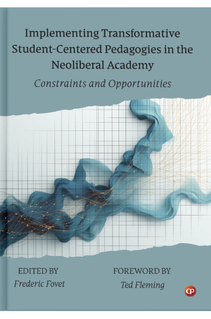
This chapter is a part of: Implementing Transformative Student-Centered Pedagogies in the Neoliberal Academy: Constraints and Opportunities
ISBN (Ebook): 978-93-49926-91-2
ISBN (Hardcover Print): 978-93-49926-11-0
ISBN (Softcover Print): 978-93-49926-31-8
© CSMFL Publications & its authors.
Published: May 05, 2026
Abstract
This chapter presents a polemical encounter with the ideology of neoliberalism that governs Higher Education Institutes (HEIs) in post-apartheid South Africa by focusing upon manifestations thereof in the policies of Recognition of Prior Learning (RPL) and ad eundem gradum (AEG). Concordant with use of the polemical voice, the argument begins by offering a private or experiential view of challenges met in researching the implementation of these policies and the pedagogical vision or ideology that underpins them. After offering a brief literature review and explaining the policies of RPL and AEG, substantial attention is paid to two journal articles – written by South African scholars Ivor Baatjes (2005) and Corinne Knowles (2019) – that offer scathing critiques of the implementation and effects of a neoliberal agenda in South African universities. These critiques feed into an assertion of pedagogical alternatives put forward by Baatjes and Knowles as well as two international scholars, bell hooks (1994) and Emrah Karakilic (2020). It is shown that a common point of focus for these scholars is the importance of historically disadvantaged students being admitted to study in HEIs. The argument proceeds by providing an anonymous case study of a South African Master’s in Creative Writing (MACW) Program that has sought to implement alternative pedagogical strategies. This case study pays particular attention to attempts made within this program to admit and support historically disadvantaged students. In the chapter’s conclusion the author resumes the worm’s eye view that initiated the argument and assesses the likelihood of HEIs actualizing a dynamic, inclusive and, ultimately, politically meaningful pedagogical vision.
Keywords: Polemic, Neoliberal Agenda, Recognition of Prior Learning (RPL), Ad Eundem Gradum (AEG), Pedagogical Alternatives, Case Study
References
- Akala, B.M.M. (2021). A critical reflection on neoliberalism policies and neo-colonialism at African universities. Journal of Decolonising Disciplines, 3. https://upjournals.up.ac.za/index.php/jdd/article/view/3546
- Baatjes, I. G. (2005). Neoliberal Fatalism and the Corporatisation of Higher Education in South Africa. Quarterly Review of Education & Training in South Africa, 12(1), 25-33. https://ccs.ukzn.ac.za/files/Corporat%20in%20H%20edu.pdf
- Chisholm, L. (2013). The textbook saga and corruption in education. Southern African Review of Education, 19(1), 7-22. https://nicspaull.com/wp-content/uploads/2015/04/chisholm-2013-textbook-saga-in-sa.pdf
- Baxter, J., Ehren, M., & Patterson, A. (2018). Distrust: Context, Culture and Corruption: the case of Governance of South African Education. Research Gate, 1-17. https://www.researchgate.net/profile/Jacqueline-Baxter/publication/325298398_Distrust_Context_Culture_and_Corruption_the_case_of_Governance_of_South_African_Education/links/5b044a694585154aeb07ef70/Distrust-Context-Culture-and-Corruption-the-case-of-Governance-of-South-African-Education.pdf
- Baxter, J., & Ehren, M. (2019). Corruption and trust in South African Education: Perceptions of teachers and school boards. https://oro.open.ac.uk/68573/
- Chisholm, L. (2013). The textbook saga and corruption in education. Southern African Review of Education, 19(1), 7-22. https://nicspaull.com/wp-content/uploads/2015/04/chisholm-2013-textbook-saga-in-sa.pdf
- Council on Higher Education (2016). Policies on the Recognition of Prior Learning, Credit Accumulation and Transfer, and Assessment in Higher Education. https://fundisa.ac.za/wp-content/uploads/2015/10/RPL-CAT-Assessment-Policy-Document.pdf
- Council on Higher Education. Manual for Institutional Audits (2021). http://www.institutionalplanning.uct.ac.za/sites/default/files/image_tool/images/129/Manual%20for%20Institutional%20Audits_FINAL%20March%202021.pdf
- Council on Higher Education. Framework for Institutional Audits (2021). http://www.institutionalplanning.uct.ac.za/sites/default/files/image_tool/images/129/Framework%20for%20Institutional%20Audits_FINAL%20March%202021%20%28003%29.pdf
- Deleuze, G., & Guattari, F. (1983). Anti-Oedipus: Capitalism and Schizophrenia. University of Minnesota Press.
- Dames, E. W. (2017). The impact of neoliberalism on South Africa’s education policy discourse post-1994: The quest for a radical critical pedagogy. https://uwcscholar.uwc.ac.za/items/4d520b48-30f8-454b-83e7-a2ea3980bad3
- Department of Higher Education and Training, South Africa (2013). White Paper for Post-School Education and Training. https://www.dhet.gov.za/SiteAssets/Latest%20News/White%20paper%20for%20post-school%20education%20and%20training.pdf
- Fourie, D. (2022). The neoliberal influence on South Africa’s early democracy and its shortfalls in addressing economic inequality. Philosophy & Social Criticism, 50(5), 823-843. https://doi.org/10.1177/01914537221079674 (Original work published 2024)
- Government Report (2016). Recognition of Prior Learning Coordination Policy. https://www.greengazette.co.za/documents/national-gazette-39876-of-31-march-2016-vol-609_20160331-GGN-39876.pdf
- Hallak, J., & Poisson, M. (2002). Ethics and corruption in education. In Policy Forum (Vol. 25). https://www.researchgate.net/profile/Muriel-Poisson/publication/44829662_Ethics_and_corruption_in_education_results_from_the_experts_workshop_held_at_the_IIEP_-_Paris_28-29_November_2001/links/56de068e08aeb8b66f94a4eb/Ethics-and-corruption-in-education-results-from-the-experts-workshop-held-at-the-IIEP-Paris-28-29-November-2001.pdf
- Heyneman, S. P. (2004). Education and corruption. International Journal of Educational Development, 24(6), 637-648. https://doi.org/10.1016/j.ijedudev.2004.02.005
- hooks, b. (1994). Teaching to Transgress. Education as the Practice of Freedom. Routledge.
- Jarbandhan, D.B. (2023). Corruption in Healthcare Infrastructure Public Private-Partnerships: A South African Case Study. https://journals.co.za/doi/full/10.10520/ejc-adminpub_v31_n1_a7
- Jonck, P., & Swanepoel, E. (2016). The influence of corruption: a South African case. Policing: An International Journal of Police Strategies & Management, 39(1), 159-174. https://www.emerald.com/insight/content/doi/10.1108/PIJPSM-06-2015-0076/full/html
- Karakilic, E. (2020). Idleness as a micro ethico-political action. Organization 28(6), 1–10. https://www.researchgate.net/publication/344949503_Idleness_as_a_micro_ethico-political_action
- Klees, S. J. (2008). A quarter century of neoliberal thinking in education: Misleading analyses and failed policies. Globalisation, Societies and education, 6(4), 311-348.
- Knowles, C. (2019). Access or set up? A Critical Race Feminist, Black Consciousness, and African Feminist Perspective on Foundation Studies in South Africa. Alternation 26(2), 117–137. https://doi.org/10.29086/2519-5476/2019/v26n2a6
- MANOVA. (2021). Statistics Solutions. https://www.statisticssolutions.com/free-resources/directory-of-statistical-analyses/manova/
- Mathebula, T. (2018). Human Rights and Neoliberal Education in Post-apartheid South Africa, Journal of Education, 71, 91-106. http://journals.ukzn.ac.za/index.php/joe
- Mkhize, N. (2015). Tenacious Belief in the Ideal of the University. Business Day. https://www.businesslive.co.za/bd/opinion/columnists/2015-05-05-tenacious-belief-in-the-ideal-of-the-university/
- Mokubyane, P. H., & Moeti, K. B. (2016). Quality higher education needed for development: a case study of perceptions on ethics and corruption in South African higher education institutions. Journal of Public Administration, 51(4), 781-797. https://hdl.handle.net/10520/EJC-9909a06fb
- Muller, S.M. (2018). The University is not a Factory. Mail & Guardian. https://mg.co.za/article/2018-10-12-00-the-university-is-not-a-factory/
- Public Service Education and Training Authority (PSETA) (2017). Implementation of Recognition of Prior Learning in the Public Service, South Africa: An Exploratory Study. http://www.pseta.org.za/wp-content/uploads/2017/10/Implementation-of-recognition-of-prior-learning-in-Public-Se2.compressed.pdf
- Munyaradzi, J. (2024). Neoliberalism in South African Higher Education Language Policy: A Decolonial Perspective. Transformation in Higher Education, 9, 395. https://eric.ed.gov/?id=EJ1452529
- Pennington, A., Mokose, M., Smith, M. N., & Kawanu, Z. (2017). Neoliberalism and the crisis in higher education in South Africa. New Agenda: South African Journal of Social and Economic Policy, 64, 28-32. https://journals.co.za/doi/pdf/10.10520/EJC-584cc4d73
- Pitsoe, V. J. (2013). Values education as a social instrument for reducing corruption, poverty and inequality. Mediterranean Journal of Social Sciences, 4(13), 745-753. https://citeseerx.ist.psu.edu/document?repid=rep1&type=pdf&doi=dd1d46a83a7a934e985266aa37d53f23e3730170
- Read, J. (2009). A genealogy of homo-economicus: neoliberalism and the production of subjectivity. Foucault Studies 6, 25–36. https://rauli.cbs.dk/index.php/foucault-studies/article/download/2465/2463/
- Serfontein, E., & De Waal, E. (2015). The corruption bogey in South Africa: Is public education safe? South African Journal of Education, 35(1), 1-12. https://hdl.handle.net/10520/EJC167018
- The Rhodes University Policy on the Recognition of Prior Learning Policy (2020). https://www.ru.ac.za/media/rhodesuniversity/content/facultyofeducation/documents/Recognition_of_Prior_Learning_Policy_November_2020.pdf
- South African Revenue Service (2021). Close Corporations (CC). https://www.sars.gov.za/businesses-and-employers/small-businesses-taxpayers/starting-a-business-and-tax/close-corporations-cc/
- South African Qualifications Authority (2002). The Recognition of Prior Learning in the context of the South African National Qualifications Framework Policy document, South African Qualifications Authority, Pretoria.
- Steynberg, L., Grundling, J. P., & Venter, M. (2024). Neo-Liberalism’s Shadows: Modern Slavery in South African Higher Education. Transformation in Higher Education, 9, 405. https://eric.ed.gov/?id=EJ1452525
- Van der Walt, J. L. (2017). Some recent responses to neoliberalism and its views on education. HTS: Theological Studies, 73(3), 1-8. https://journals.co.za/doi/abs/10.4102/hts.v73i3.4493
- van Vuuren, N. (2025). Navigating the Neoliberal maze: South African academics’ coping strategies in modern higher education. SA Journal of Industrial Psychology, 51, 2234. https://journals.co.za/doi/abs/10.4102/sajip.v51i0.2234
This book is available worldwide via EBSCOhost Academic Collection, EBSCO E- books, Google Play Books, Amazon, World Cat Discovery Service/OCLC, CSMFL Bookstore, and 200+ book resellers and academic content vendors.
Statement on Publication Ethics
We, at CSMFL Publications, are committed to ensure the unbiased and transparent publishing, and upholding the high standards of editorial integrity in our publications. To know more, please read our Statement on Publication Ethics, Editorial Integrity & Misconduct