Teachers, Scholars, Union Members, Radicals: Non-Tenure Track Faculty and Non-Traditional Grading in A University Writing Program
Christina Michaud
Writing, Master Lecturer, Boston University College of Arts and Sciences Writing Program, USA.
10.46679/9789349926912ch15
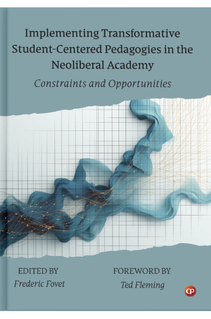
This chapter is a part of: Implementing Transformative Student-Centered Pedagogies in the Neoliberal Academy: Constraints and Opportunities
ISBN (Ebook): 978-93-49926-91-2
ISBN (Hardcover Print): 978-93-49926-11-0
ISBN (Softcover Print): 978-93-49926-31-8
© CSMFL Publications & its authors.
Published: May 05, 2026
Abstract
University writing programs, primarily staffed by contingent faculty with relatively little status in the university, may find themselves advocates of non-traditional grading (including contract grading, labor-based grading, and ungrading), which is an example of a student-focused inclusive and antiracist pedagogy. As non-tenure track faculty have unionized, in some universities, writing program faculty have led labor organizing efforts on behalf of all contingent faculty across the university. Conflicts therefore arise between the pressures of the neoliberal university, including a pushback against diversity, equity, and inclusion (DEI) efforts, and the interests of writing program faculty who are on the forefront of disseminating new pedagogies even while they are disenfranchised by typical university governing bodies.
Keywords: Contingent Faculty, Alternative Grading, Antiracist Pedagogy, Faculty Unionization, Neoliberal University, Writing Programs
References
- Blake, F., & Ioanide, P. (2019). Antiracism Incorporated. In F. Blake, P. Ioanide, & A. Reed (Eds.), Antiracism, Inc.: Why the way we talk about racial justice matters (pp. 17-40). Punctum Books. https://doi.org/10.2307/j.ctv11hptff
- Blum, S. D. (2020). Introduction: Why ungrade? Why grade? In S. D. Blum (Ed.), Ungrading: Why rating students undermines learning (and what to do instead) (pp. 1-22). West Virginia University Press.
- Boretz, E. (2004). Grade inflation and the myth of student consumerism. College Teaching, 52(2), 42-46. https://doi.org/10.3200/CTCH.52.2.42-46
- Boston University. Communication. BU Hub. (n.d.). https://www.bu.edu/hub/about-the-hub/what-is-the-hub/communication/
- Boston University. Mission Statement. (n.d.). https://www.bu.edu/about/mission-statement/
- Bulaitis, Z. H. (2020). Value and the humanities: The neoliberal university and our Victorian inheritance. Palgrave Studies in Literature, Culture and Economics. London: Palgrave Macmillan. https://doi.org/10.1007/978-3-030-37892-9
- Carillo, E. C. (2021). The Hidden Inequalities in Labor-Based Contract Grading. Utah State University Press. Logan, Utah. http://www.jstor.org/stable/j.ctv20zbkwn
- Carter, G.M., & Legleitner, R. (2021). Prioritizing ourselves and our values: Intersectionality, positionality, and dismantling the neoliberal university system. Academic Labor: Research and Artistry 5(1). https://digitalcommons.humboldt.edu/alra/vol5/iss1/2
- Crenshaw, K. (1989). Demarginalizing the intersection of race and sex: A Black feminist critique of antidiscrimination doctrine, feminist theory and antiracist politics. University of Chicago Legal Forum, 1(8), 139-167. http://chicagounbound.uchicago.edu/uclf/vol1989/iss1/8
- Danielewicz, J., & Elbow, P. (2008). A unilateral grading contract to improve learning and teaching. College Composition and Communication, 61(2), 244-268. http://www.jstor.org/stable/40593442
- Elbow, P. (1973). Writing without teachers (1st ed.). Oxford University Press. https://doi.org/10.1093/oso/9780195120165.001.0001
- Elbow, P. (1998). Changing grading while working with grades. In F. Zak & C. C. Weaver (Eds.), The theory and practice of grading writing: Problems and possibilities (pp. 171-184). State University of New York Press.
- Fishman, B. (2021). Introduction to the 50th anniversary edition. In H. Kirschenbaum, R. Napier, & S. B. Simon, Wad-ja-get? The grading game in American education (50th anniversary ed., pp. xiv-xxxiii). Michigan.
- Gomes, M., Bellati, B., Hope, M., & LaFerriere, A. (2020). Enabling meaningful labor: Narratives of participation in a grading contract. Journal of Writing Assessment, 13(2). Retrieved from http://journalofwritingassessment.org/article.php?article=152
- Heller, J. R. (2012). Contingent faculty and the evaluation process. College Composition and Communication, 64(1), A8-A12. https://www.jstor.org/stable/23264922
- Inoue, A. B. (2012). Grading contracts: Assessing their effectiveness on different racial formations. In A. B. Inoue & M. Poe (Eds.), Race and writing assessment (pp. 78-94). Peter Lang.
- Inoue, A. B. (2015). Antiracist writing assessment ecologies: Teaching and assessing writing for a socially just future. WAC Clearinghouse. https://doi.org/10.37514/PER-B.2015.0698
- Inoue, A. B. (2019). Labor-based grading contracts: Building equity and inclusion in the compassionate writing classroom. WAC Clearinghouse. https://doi.org/10.37514/PER-B.2022.1824
- Kendi, I. X. (2019). How to be an antiracist. One World.
- McKinney, C. (2018). Reassessing intersectionality: Affirming difference in higher education. Composition Forum, 39. https://compositionforum.com/issue/39/intersectionality.php
- Milanese, M., & Kordonowy, G. (2022). Why we stopped grading our students on their writing. WBUR Cognoscenti. https://www.wbur.org/cognoscenti/2022/01/12/contract-grading-education-college-writing-marisa-milanese-gwen-kordonowy
- Mountz, A., Bonds, A., Mansfield, B., Loyd, J., Hyndman, J., Walton-Roberts, M., et al. (2015). For slow scholarship: A feminist politics of resistance through collective action in the neoliberal university. ACME: An International E-Journal for Critical Geographies, 14(4), 1235–1259. https://acme-journal.org/index.php/acme/article/view/1058/1141
- Pytleski, P. D. (2015). Contact zones and contingent faculty: An argument for conversion. College Composition and Communication, 67(1), A4-A8.
- Raimes, A. (1991). Out of the Woods: Emerging Traditions in the Teaching of Writing. TESOL Quarterly, 25(3), 407–430. https://doi.org/10.2307/3586978
- Read, B., & Bradley, L. (2018). Gender and waiting in everyday academic life. In Y. Taylor & K. Lahad (Eds.), Feeling academic in the neoliberal university: Feminist flights, fights and failures (Palgrave Studies in Gender and Education). Palgrave Macmillan.
- Rhoades, G. (2020). Taking college teachers’ working conditions seriously: Adjunct faculty and negotiating a labor-based conception of quality. The Journal of Higher Education, 91(3), 327-352. https://doi.org/10.1080/00221546.2019.1664196
- Samuels, R. (2016). Forum: Contingent Labor, Writing Studies, and Writing about Writing. College Composition and Communication, 68(1), A3–A9. http://www.jstor.org/stable/44783528
- Schwartz, V. M. (2020). (De)Norming Classroom Merit: Grading Contracts as an Assessment Genre (Publication No. 28088751) [Doctoral dissertation, University of Wisconsin-Madison]. ProQuest Dissertations Publishing. https://asset.library.wisc.edu/1711.dl/N4C7726RRMN778M/R/file-823d9.pdf
- Stommel, J. (2020). How to ungrade. In S. D. Blum (Ed.), Ungrading: Why rating students undermines learning (and what to do instead) (pp. 23-41). West Virginia University Press.
- Tanenbaum, L., & Gallagher, P. (2020, October 7). Grading during—and beyond—COVID. Hybrid Pedagogy. https://hybridpedagogy.org/grading-during-covid/
- Troiani, I., & Dutson, C. (2021). The Neoliberal University as a Space to Learn/Think/Work in Higher Education. Architecture and Culture, 9(1), 5-23. https://doi.org/10.1080/20507828.2021.1898836
- Wardle, E. (2013). Intractable writing program problems, kairos, and writing about writing: A profile of the University of Central Florida’s first-year composition program. Composition Forum, 27. https://www.compositionforum.com/issue/27/ucf.php
- Womack, A. (2017). Teaching is accommodation: Universally designing composition classrooms and syllabi. College Composition and Communication, 68(3), 494–525. http://www.jstor.org/stable/44783578
This book is available worldwide via EBSCOhost Academic Collection, EBSCO E- books, Google Play Books, Amazon, World Cat Discovery Service/OCLC, CSMFL Bookstore, and 200+ book resellers and academic content vendors.
Statement on Publication Ethics
We, at CSMFL Publications, are committed to ensure the unbiased and transparent publishing, and upholding the high standards of editorial integrity in our publications. To know more, please read our Statement on Publication Ethics, Editorial Integrity & Misconduct